


Self-Aligning Cylindrical Roller (SACR) Bearings: The Non-Locating Bearing Concept
ABSTRACT
This article considers the potential for utilizing cylindrical roller bearings in paper machine applications. It examines comparisons between a traditional spherical roller bearing versus a cylindrical roller bearing on press rolls and dryer cylinders. With the help of an actual case study, the article shows the impact on shaft misalignment, thermal expansion and common lubrications issues when the bearings are interchanged. The results show the positive impact to operating speed, lubrication and friction reduction/energy consumption.
INTRODUCTION
Paper mills are complex, expensive installations. To ensure profitable operation, a high level of plant availability is of fundamental importance. This high level of availability is also considered in various bearing designs, which must have a theoretical bearing life of at least 100,000 hours. The rolling bearings in press rolls and dryer rolls are subjected to extreme operating conditions. Specifically, since dryer rolls are heated by steam, the rolling bearings are subjected to high thermal stress. Appropriate heat treatment and dimensional stabilization of rolling bearings, as well as good lubrication, are essential preconditions for trouble-free operations.
The dryer section of a paper machine requires excessive heating in dryer rolls, which results in considerable elongation by several millimeters (1-1.5 mm per meter of bearing distance). Thus, a non-locating bearing on the operator end (guide end) of the paper machine is particularly important. In addition, shaft misalignments must be compensated. Great thermal stressing in the dryer section requires roller bearings with special properties. The self-aligning cylindrical roller (SACR) bearing was developed as a floating bearing especially for heated cylinders in paper machines to address the application requirements.
DESIGN COMPARISONS
For many years, SACR bearings in plummer block housings have been used as non-locating bearings (Figure 1). They offer advantages over standard non-locating bearing arrangements with spherical roller bearings, mounted either with a displacement facility in the housing or in an axially movable rocker block housing, or with bearings of other types. Features of this design are:
- Large changes in the axial length of the dryer roll are compensated without constraint in the bearing between the inner raceway and the rolling elements. This eliminates the need for a rocker block housing.
- Self-alignment capability, which is due to the spherical outer ring and the plain bearing pivot ring with moly coating (to minimize fretting corrosion).
- Optimum lubrication of the bearing due to direct center oil feed into the bearing’s interior as well as drainage on both sides of the bearing. This reduces frictional power loss.
- Improved vibration behavior of the bearing arrangement system with cylindrical roller bearings and ridged mounted housing.
- Conversion to self-aligning cylindrical roller bearings without major housing modifications eliminates additional capital cost.
- Case-carburized inner ring provides dimensional stability up to +200°C as well as improved wear resistance.
- Supports various load directions.
- Using a plummer block housing that has been bolted to the machine frame supported additional tilting moments, e.g., from the cable sheave and/or the steam joint.
- Rigid screw mounting securely protects the housing against lifting off when it is installed in earthquake-prone areas.
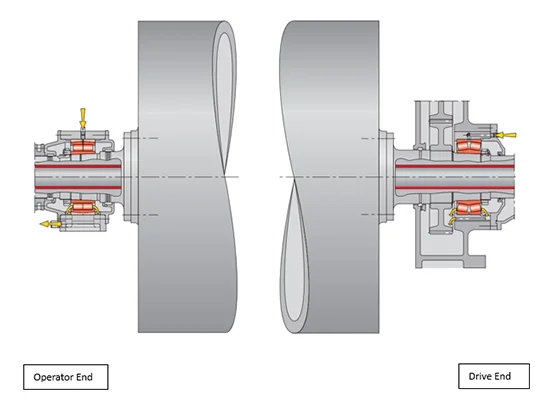 Figure 1: Bearing arrangement of a dryer cylinder with self-aligning cylindrical roller bearing on the operator end and spherical roller bearing on the drive end.
The two conventional non-locating bearing concepts are as follows: In paper machinery with a working roll width of up to approximately 5 meters, a spherical roller bearing that can undergo axial displacement in the housing in response to elongation of the dryer roll is normally used. In paper machinery with a working roll width of more than 5 meters, a rocker block housing is often used (Figure 2). In this type of bearing arrangement, the spherical roller bearing is fitted as a locating bearing inside the plummer block housing, which can be axially displaced without constraints on three rocker blocks in response to elongation of the dryer roll.
On the drive side, the dryer roll is supported and guided by spherical roller bearings. In older, smaller paper machinery, bearings of series 222, 223, and 230 are used, while bearings of series 231 are used in newer, larger machinery. The bearings are heat stabilized to 200°C and designed with case-carburized inner rings.
Vibration monitoring technology is commonly used for the bearings in the dryer section. In SACR bearings, the vibration sensors must be mounted radially on the housing and close to the load zone. Since cylindrical roller bearings cannot transmit axial forces, the axial vibration signals are less pronounced.
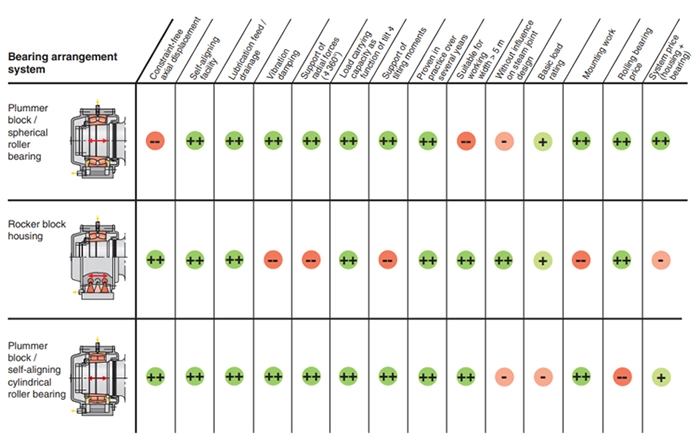 Figure 2: Comparison of non-locating bearing concepts for dryer rolls.
CASE STUDY
In an effort to increase production output, a paper company requested a rebuild of their current spherical roller bearing arrangement to a dryer bearing arrangement to support an increase in machine speed from 800 m/min to 1000 m/min. The rebuild specifications converted a traditional spherical roller bearing design on the front side to a SACR bearing. Lubrication was a key factor in the SACR design, which included a central lubrication feature compared to other floating bearing designs offered for that position. This conversion did not require a change to the existing housing or a change to the oil circulating circuit.
The SACR bearing design can accommodate misalignments of up to ± 2°, while at the same time ensuring compensation of length variations without thrust loads. Both effects are independent of each other and are exactly defined. Lubricant is supplied through holes in the middle of the outer ring, which ensures a symmetrical temperature distribution within the bearing. This allows the SACR bearing to be mounted into housings designed for spherical roller bearings without requiring modifications.
Bearing Design
The cylindrical roller bearing design has two parallel rollers and ribs on the outer ring (Figure 3). The spherical outer ring is in a plain bearing pivot ring and compensates for misalignments of the bearing seats. The self-alignment motion does therefore not occur in the rolling contact area. The ribless inner ring allows constraint-free axial displacement in the bearing. Even if the inner ring undergoes significant axial displacement, both rows of rollers remain subjected to equally high loads due to the symmetrical transmission of radial load. As a result, the cylindrical roller bearing’s load-carrying capacity is maintained to its full extent in any position.
The external dimensions of the complete cylindrical roller bearing with the pivot ring conform to the main dimensions (i.e., in accordance with DIN 616). These bearings are mounted in paper machinery plummer block housings where they act as non-locating bearings at the operator end of the dryer roll.
Just like spherical roller bearings, SACR bearings have a 1:12 tapered bore for mounting directly on the tapered journal.
Due to the higher operating temperatures and the resulting significant temperature differences between the inner and outer ring, this bearing design was commonly used on dryer rolls to account for the increased radial internal clearance C5, which corresponds approximately to the C4 radial internal clearance of spherical roller bearings after fitting.
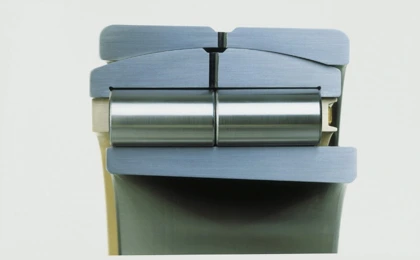 Figure 3: Self-aligning cylindrical roller bearings can be used for non-locating bearings for dryer rolls, M.G. cylinders and guide rolls. Lubrication grooves and lubrication holes in the outer ring and plain
Constraint-Free Compensation of Changes in Axial Length Caused by Thermal Expansion
The elongation of the heated dryer roll is made possible without constraint in the cylindrical roller bearing between the raceway of the lubricated inner ring and the rolling elements. This already applies when starting up in the heating phase, even at a bearing distance of 10.5 m and a roll temperature of 180 °C (approx. 15 mm axial displacement).
The cylindrical running surfaces ensure equally good kinematic conditions (identical internal clearance and low friction rolling) in all axial displacement positions of the inner ring.
Under steam feed or condensate removal at the operator end, it must be ensured that the sealing system can be axially displaced within the steam joint, but only if the steam joint is fixed to the housing.
Interchangeable with Standard Bearings
Commonly interchanged spherical bearings (with the same dimensions) can be replaced by SACR bearings without major modification work to the housings.
Compensation of Angular Misalignments
Any misalignments that may occur in mounting, for example because of an uneven machine frame or changes in the machine frame inclination during operation, can be compensated by the plain bearing pivot ring without deleterious effects on the rating life. This occurs without constraints, even up to tilt angles of 2°.
The outer ring is phosphate coated and the spherical (concave) sliding surface has a molybdenum sulfide coating. The alignment movement in operation is additionally supported by a steady feed of lubricant.
This non-locating bearing concept should be considered in applications where machinery is being modernized, speeds are being increased, as well as for new designs.
The rolling bearing rings, which feature standard heat treatment via an isothermal process, are dimensionally stable up to operating temperatures of +200 °C. This leads to compressive stresses in the surface region. This is particularly beneficial for bearings in the dryer section which, due to the unfavorable lubrication conditions, run far into the mixed friction range.
Lubrication
The plain bearing pivot ring, like the outer ring, has a lubrication groove and lubrication holes to ensure optimum lubricant supply directly to the interior of the rolling contacts. Since the oil feed is located at the center of the bearing, oil is drained from both sides (Figure 4). This lowers the risk of oil banking up and leaking.
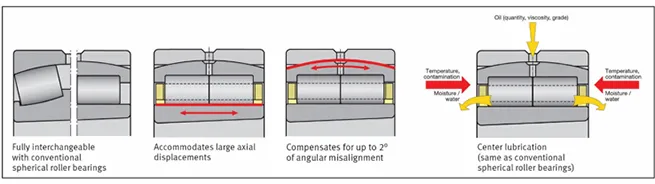 Figure 4. Overview of SACR bearing’s interchangeability, alignment compensation capability and optimized lubrication flow.
Operating Temperature
Due to their lower frictional torque, SACR bearings operate at a lower temperature than bearings with spherical running surfaces under identical conditions (Figure 5).
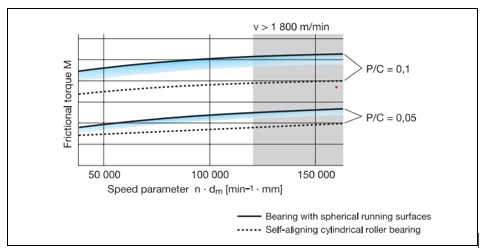 Figure 5: Load comparison of a spherical roller bearing vs. a SACR bearing.
Bearing Assembly
Mounting and dismounting procedures are similar to spherical roller bearings. In most cases, a hydraulic nut is sufficient; however, for bearings with diameters exceeding 200 mm, the standard hydraulic method may be necessary. When mounting is carried out below room temperature, no axial offset between the bearing center and the housing center must be taken into consideration (Figure 6).
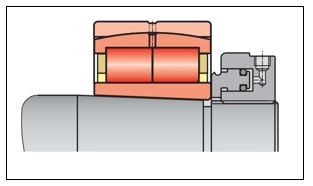 Figure 6: Illustration of a standard mounting configuration.
Housing Design
SACR bearings, when combined with a plummer block housing that is rigidly mounted (Figure 7), have favorable vibration behavior and thus provide conditions for higher speeds, especially for planned speed increases through modernization and conversion.
In addition, rocker block housings can be easily converted to screw-mounted plummer block housings, which can result in significant savings. There is no need to change the oil inlet and oil outlet. No new housings are therefore required.
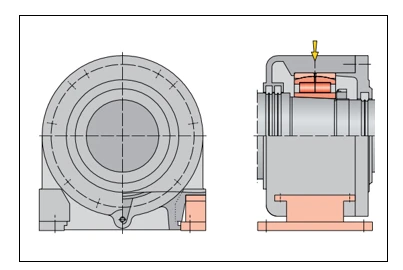 Figure 7. Illustration of SACR mounting configuration
Vibration
After the SACR conversion was completed, vibration readings confirmed significantly improved bearing performance (Figure 8).
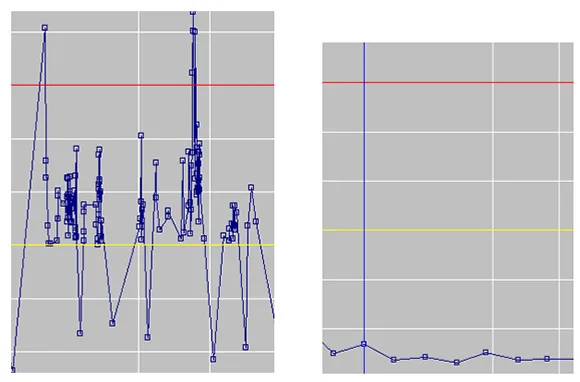 Figure 8: Vibration readings before (left) and after (right) converting to a SACR bearing.
Conclusion
Changing to SACR bearings increased output production, improved product quality, and minimized the cost of converting a dryer section.
Schaeffler Solutions for the Pulp & Paper Industry
Schaeffler offers a comprehensive portfolio of solutions engineered to meet the demanding operating conditions of the pulp, paper and tissue industry. With deep expertise in bearings, linear motion systems, power transmission, and industrial reliability, Schaeffler is focused on improving equipment performance, enhancing maintenance efficiency, and maximizing uptime across critical applications. Click here to learn more about Schaeffler’s solutions for the pulp & paper industry.
https://medias.schaeffler.us/en/raw-materials/pulp-paper