


This Finnish exposition has found a firm place in the pulp and paper conference calendar
Despite the ongoing geopolitical turmoil, global economic growth has proven rather resilient, up around 3%, according to Tuuli Koivu, chief economist at Nordea.
 Tuuli Koivu,
chief economist at NordeaSpeaking as the first keynote speaker at Pulp & Beyond (Helsinki, April 14-17), she stressed that there is still a lot of uncertainty and volatility. Oil prices could go as high as US$150/bbl, but any positive news concerning the Iran situation could change that for the better.
Although sectoral and country differences do exist, she explained that since the pandemic of 20202-21, the world can handle upsets much better.
Koivu noted that labor productivity in the U.S. far outpaces that of other countries. However, she added that this is an opportunity for others to catch up and adapt new technologies; it is not a zero-sum game.
Overall, she has a positive view of the world economy yet there are, as always has been the case, some risks.
One of the key topics of the conference, not to mention any present-day technical discussion, was artificial intelligence (AI). Antti Vasara, venture partner with Kvanted, spoke about the AI edge and echoed some of Koivu’s comments when he said that Europe risks “economic stagnation’ if it does not close the technology gap with the U.S. and China. Europe lags behind the U.S. in AI investment and adaptation measures. “Closing that gap is a competitive issue, not an IT project.”
|
 Antti Vasara,
venture partner with KvantedHe explained that AI is part of Industry 5.0. The technology is AI and human centricity. Operations are autonomous and resilient. AI’s role is presumptive and agentic. That is, define the outcome you want and let AI develop the plan that leads to the desired outcome.
Predictive maintenance, process optimization and knowledge capture are three high impact applications where AI can be of great benefit. Vasara cited a Stora Enso precision forestry project that integrates AI, remote sensing and operational data and provides biodiversity data at roughly 1,000 harvesting sites.
The amount of data/information provided by a modern mill’s process systems can be overwhelming; thus the term too much information. One of the advantages of AI is that can it help disseminate the data that can be accumulated by present day technology.
Later, in the conference track on the factory of the future, Marjo Santanen, Billerud Finland, addressed her company’s relationship with AI: Improving safety and mill operations with AI/digitalization. She said Billerud has been cautious in its approach to adapting AI as there are security concerns.
 Marjo Santanen,
Billerud FinlandShe gave a number of practical AI use cases. The first was Risk assessment: Human led; AI assisted. She explained that the risk assessment must be done by humans as this is how they learn. AI helps structure, prepare and review the assessments. One example of risk assessment is transport of reels from the mill to port.
Another case of AI use is for predictive maintenance. It can help save money and keep people safe. A third is anomaly detection and process upsets. AI can help prevent paper breaks and unsafe process conditions.
FROM THE PRODUCERS
The final keynote speaker was Wilhelm Wolff, executive vice president, strategy, for Metsä Group. Later, he also spoke with a group of industry journalists. As in other years, their visit was sponsored by the Helsinki expo and conference center.
The company had sales of Euro 5.8 billion in 2025. Market pulp accounted for the largest share but the company is also involved with tissue, board, greaseproof paper as well as solid wood.
|
 Wilhelm Wolff,
executive vice president, strategy, Metsä GroupWolff said that the market for paper grade market pulp will continue to decline. Companies need to be cost competitive and innovative. With 3.7 million t/y of market kraft pulp and BCTMP, Metsä is trying to decrease its exposure to these markets. Revenue from new sidestreams will increase in importance.
As an example, he described Metsä’s carbon capture project at its Rauma mill. With a capacity of 100,000 t/y of biogenic CO2 captured from flue gases, it is no longer a pilot but a commercial business.
He said that the “e-fuel” sector has faced a lot of headwinds but Metsä has found partners to take the volume it can produce. When asked about end uses, he replied that what the customers do with the CO2 is up to them, but noted that marine fuel is one possibility.
 Sari Pajari-Sederholm,
CEO of Metsä TissueThe CEO of Metsä Tissue, Sari Pajari-Sederholm, also spoke with the journalists. The company has nine mills in Europe and can produce 500,000 t/y. Turnover is about Euro 1 billion annually. She said that the sector is not really open to globalization as tissue cannot be shipped efficiently because of its light weight. She added that 99% of tissue produced in Europe is consumed there.
She sees the sector open for growth and the company is now assessing opportunities in Europe. When asked, she did say that there are no plans to enter the TAD sector.
Kati Kaskeala, marketing director of UPM, spoke of the company’s transition to a “materials solution” company. News had just come out of the UPM: SAPPI decision to form a joint venture that would combine UPM’s graphic paper mills and SAPPI’s European paper mills. It would be owned 50:50 and operate as an independent company. Regulatory approval is still needed.
Besides communication papers, UPM is active in renewable fibers (pulp and timber), advanced materials (e.g., adhesives) and decarbonization solutions (biochemicals, biofuels).
Kaskeala noted that the company is just coming to the end of a large investment cycle: the Leuna biochemical refinery in Germany as well as the Paso de los Toros pulp mill in Uruguay. Strategy will now focus on restoring competitiveness and capturing the full potential of the Paso de los Toros mill.
Leuna is the world’s first wood-based biochemicals refinery. The concept was born in 2012 and the decision to go ahead was made in 2020. Full production is expected in late 2026. The facility can produce syngas and lignin for such end uses as textiles, deicing fluids, rubbers and plastics.
The Paso de los Toros mill can produce 2.1 million t/y of bleached eucalyptus pulp. Started up in 2023, the mill provides 6% of all the electricity produced in Uruguay. There is a direct rail connection to the UPM-owned pulp terminal in the port of Montevideo. Kaskeala said there is biostream development potential at the mill.
UPM is the largest multi-fiber pulp producer in the world, according to Kaskeala. “Reliability, high quality and security of supply are the key needs of the customers, as well as sustainability.”
The company is the second largest pulp supplier to the North American market was a market share just north of 10% or about 350,000t/y, most of it to the U.S.
PI FINDS A WINNING FORMULA
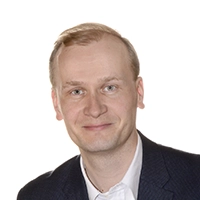 Antti Lindqvist,
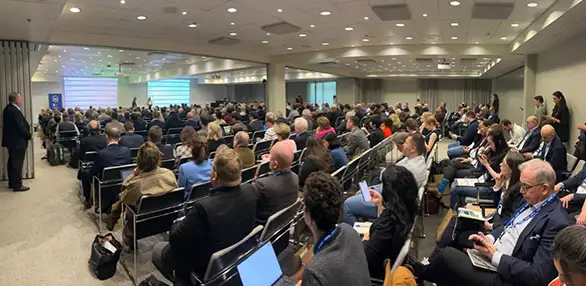
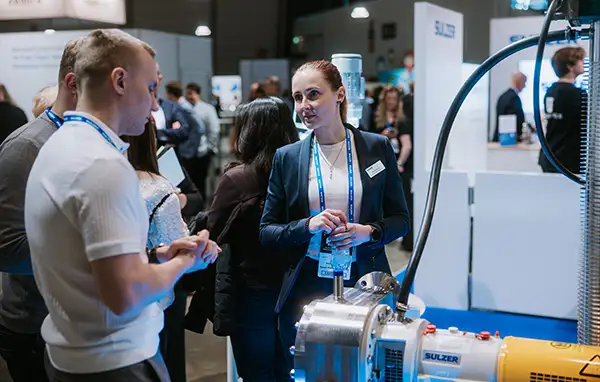
managing director of PIWith two iterations of Pulp and Beyond successfully passed, it appears that the organizers, PI (Finnish Forest Products Forest Engineers Association) and the Helsinki Expo and Convention Center have found a good niche for its conference/exhibition. The first day opens with a number of keynote speakers followed by a 3-track conference with concurrent sessions. The second and third day are dedicated to the exhibition although there are presentations at the Speakers’ Corner and Main Stage.
Excursions are offered on the final day. This year, delegates could choose between a visit to Kemira and the UPM Kirkniemi mill or a tour of the beautiful new Stora Enso building in Helsinki followed by visit to ABB.
All events were sold out. The conference attracted almost 400 delegates while the exhibit featured 257 suppliers/institutes and had 8,400 visitors.
|
Plans are already underway for Pulp and Beyond 2028.

Graeme Rodden has covered the pulp and paper industry for more than 40 years, including serving as editor of several well-known paper industry magazines.