

With an investment of more than $14 million, Innofibre is adding a second applied research facility in Trois-Rivières to support the development of nonwovens, biochar, biomaterials, residual biomass valorization and decarbonization solutions.
A Key Link Between Bio-Based Research and Industrial Applications
The new site in Trois-Rivières addresses a central challenge in the bioeconomy: moving more quickly from laboratory results to processes, materials and products that can be tested under near-industrial conditions.
Innofibre, a technology transfer centre affiliated with Cégep de Trois-Rivières, is establishing this new research facility in the Hautes-Forges industrial park. The total investment exceeds $14 million, with contributions from Québec’s Ministry of Economy, Innovation and Energy, Canada Economic Development, Innofibre, the Desjardins Grand Mouvement Fund and Séquoia Industries.
Aligned with its research focus and its vision of becoming a Canadian bioeconomy hub, this new infrastructure strengthens the centre’s capacity to help companies develop, validate and scale bio-based products.
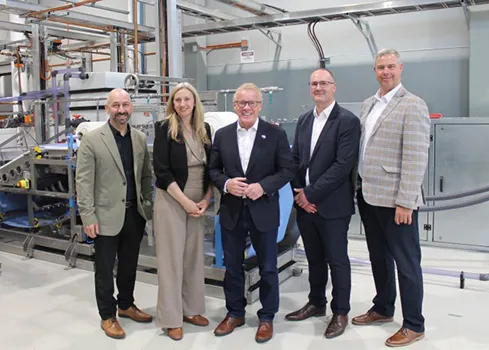 Charles Massicotte Bourbeau, General Manager of the Caisse Desjardins de Trois Rivières, Caroline Desrochers, Member of Parliament for Trois Rivières, Jean Boulet, Member of the National Assembly for Trois Rivières and Minister of Labour, Jean Philippe Jacques, Director of Innofibre, and Éric Milette, General Manager of Cégep de Trois Rivières.
Beyond the infrastructure announcement, the project targets a sensitive point for many companies active in bio-based products: the transition from idea to prototype to pre-commercial validation. In this sector, the challenge is not only to develop a promising formulation or material, but also to demonstrate that the process can operate with variable inputs, larger volumes and performance requirements compatible with industrial realities.
That is precisely where the new site comes in.
The second facility will enable Innofibre to expand its capabilities in nonwovens, biochar, bio-based products, residual biomass valorization and decarbonization, in addition to its existing expertise in pulp and paper, packaging and biomaterials.
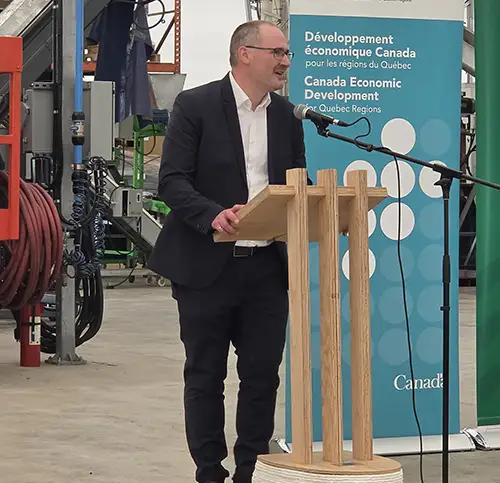 Jean-Philippe Jacques, director of Innofibre
“We want this new facility to bring together the stakeholders in the bio-based innovation ecosystem so we can accelerate technological R&D in a collaborative approach with the private sector. We also want to open our doors to companies that could benefit from developing new technologies that complement the equipment available in our laboratories,” said Jean‑Philippe Jacques, Director of Innofibre.
For the pulp and paper sector, the main interest lies in the continuity and strengthening of services that are already well established. Innofibre has for many years supported manufacturers through applied research, laboratory trials and validation on pilot equipment. Its activities include pulping, innovative papers and paperboard, surface treatment, cellulosic materials and thermoformed products.
The new infrastructure builds on this foundation by offering more resources to explore product diversification, residual biomass valorization and the integration of bio-based solutions that are compatible with the sector’s industrial realities.
The new centre is therefore expected to reinforce a function that is becoming increasingly strategic: testing, adjusting and validating solutions before companies commit to larger investments. In the markets for paper, packaging, biomaterials and residual biomass utilization, this step can be the difference between an interesting innovation and a solution that can actually be integrated into a production line.
A Favourable but Demanding Context
Demand for bio-based solutions is growing, driven by pressure on packaging, reduced use of fossil‑based materials, resource circularity and process decarbonization. At the same time, these markets remain demanding. Products must meet strict requirements in terms of performance, stability, cost, recyclability and compatibility with existing equipment.
This is particularly true for fibre‑based packaging applications.
Projects supported by CRIBIQ already illustrate this dynamic, including the development of bio-based barrier solutions for packaging papers designed to be recyclable, repulpable, bio-based and compostable, with pilot trials carried out on CCTT equipment.
In this context, the new infrastructure should not be seen only as an increase in capacity. It is part of a scale‑up strategy, helping companies move from proof of concept to trials that are more representative of market conditions.
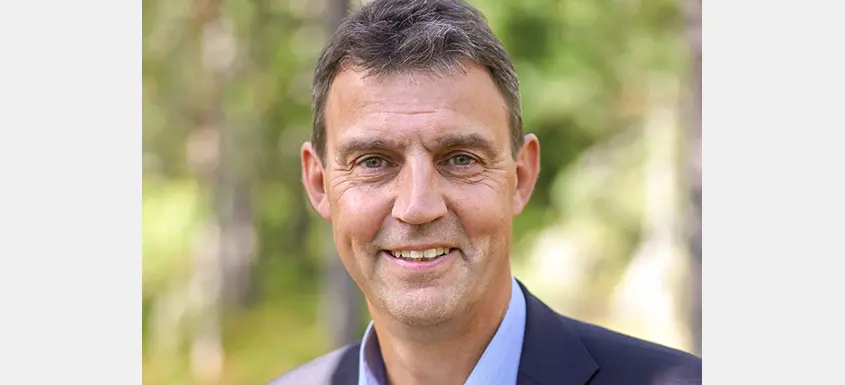
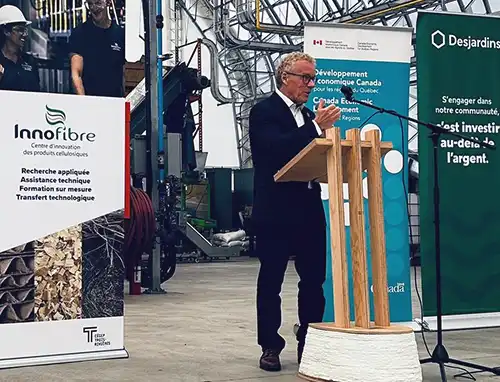 Jean Boulet, Member of the National Assembly for Trois‑Rivières, Minister of Labour and Minister Responsible for Canadian Relations. Image: Government of Québec
Residual Bioresources, Biochar and Decarbonization
The addition of expertise in biochar and residual bioresource valorization also broadens the centre’s potential role beyond finished products. For the forestry, pulp and paper and bio-based industries, residual biomass is no longer just a material to be managed. It is becoming a potential feedstock for new materials, bioproducts, energy solutions and lower‑carbon processes.
The organization is already involved in developing bio-based products and materials from forest, agricultural, algal and residual biomass, as well as in the densification of residual bioresources.
This aspect is important for processing companies, because the performance of a bioproduct rarely depends on a single factor. Feedstock, conditioning, formulation, drying, stability, mechanical processing and compatibility with existing processes all need to be evaluated together — often the point at which projects tend to slow down.
A Regional Asset with Broader Industrial Impact
The choice of Trois‑Rivières is no accident. The region already has a strong industrial history in pulp and paper and clean technologies. With this new infrastructure, the centre is reinforcing its role within an ecosystem where applied research centres, SMEs and manufacturers need to collaborate earlier in technology development.
“This new investment in Innofibre’s infrastructure sends a strong signal: Québec is betting on bio-based innovation and on its regions to build a greener and more competitive economy. Trois‑Rivières is emerging as a true centre of excellence, and the entire forestry sector will benefit,” said Jean Boulet, MNA for Trois‑Rivières and Québec’s Minister of Labour and Minister Responsible for Canadian Relations.
For the pulp and paper, packaging, biomaterials and bio-based product sectors, the value of this new asset will be measured less by its size than by its ability to help companies complete the final steps before entering the market.
In a sector where ideas are plentiful, competitive advantage increasingly depends on the ability to validate technologies quickly, reduce risk and generate data that industry can use.
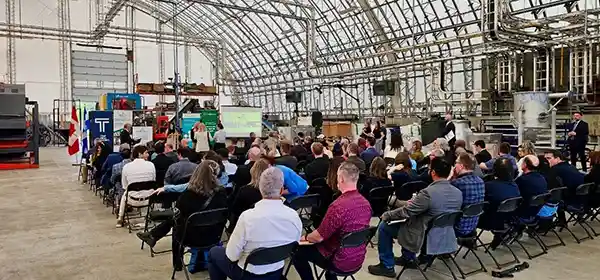 Image: Vallée de la Transition Énergétique
Innofibre is a college technology transfer centre affiliated with Cégep de Trois‑Rivières. The organization specializes in applied research, papermaking processes, biomaterials, bio‑based products and residual biomass valorization.