

Greif is entering fiscal 2026 with a cleaner portfolio and a stronger balance sheet following the divestment of its Containerboard business.
With that operation now treated as discontinued, the company’s story is centered on its continuing industrial packaging segments and on execution rather than a near-term demand rebound.
In the first quarter of 2026, Greif posted a solid operating step-up, with Adjusted EBITDA rising year over year as cost actions and margin expansion offset a still muted demand backdrop. Management highlighted tangible progress on its cost optimization program, alongside tighter SG&A ( Selling, General and Administrative expenses) and manufacturing cost control, positioning those internal levers as the primary drivers of earnings improvement.
The post divestment financial profile is also reshaping capital strategy. Greif significantly reduced debt and leverage, creating room for disciplined share repurchases and a more flexible capital allocation posture. Cash flow comparisons, meanwhile, are complicated by the absence of divested operations, making headline free cash flow less directly comparable to prior periods.
Despite the strong quarter, guidance remains deliberately conservative, with Greif reaffirming the low end of its fiscal 2026 targets reflecting caution on industrial demand and a preference for forecasts anchored in controllable variables like price/cost and operational execution.
Where Greif stands now: entering 2026, the company looks like a business transitioning from portfolio reshaping to operating performance less exposed to containerboard cyclicality, more reliant on industrial packaging fundamentals, and betting that cost discipline and a tighter balance sheet can keep earnings durable until volumes eventually turn.
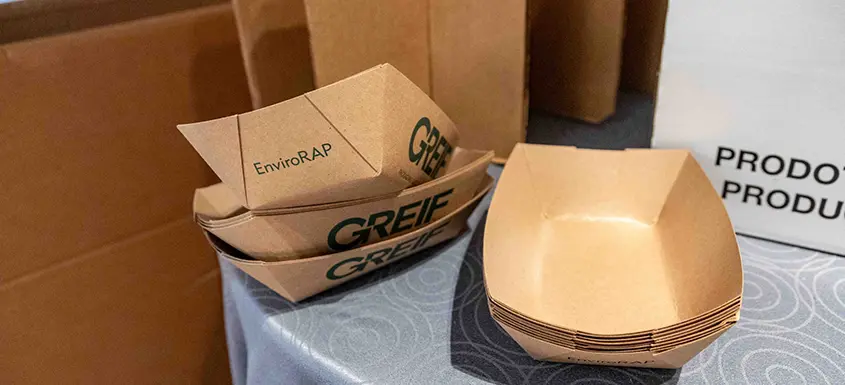
Greif is now a more focused industrial packaging company, following the divestment of its containerboard business and a strategic reset of its portfolio. The company is centered on steel, polymer, fiber and closure solutions, supported by a global manufacturing and service footprint.
Source: Greif