
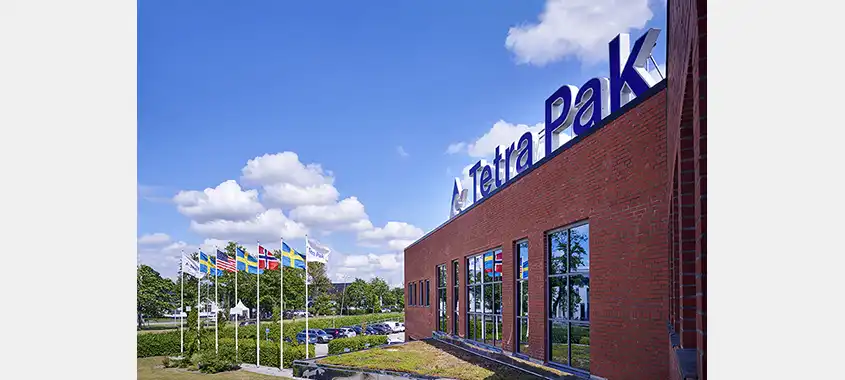
Tetra Pak is investing €60 million in a new pilot plant in Lund, Sweden, to accelerate the development of its paper-based barrier technology for aseptic beverage cartons.
The facility will support the industrialisation of an alternative to the aluminium foil layer traditionally used in aseptic packaging. By replacing aluminium with a paper-based barrier, Tetra Pak aims to increase the renewable content of cartons while maintaining food safety and shelf-life performance.
According to the company, the new material raises the paper content of beverage cartons to around 80%. When combined with plant-based polymers, the traceable renewable content can reach up to 92%, delivering a potential carbon footprint reduction of up to 43%, based on Carbon Trust-verified calculations.
The simplified material structure — reduced from three main materials to two — is also expected to support recycling by improving fibre recovery and the quality of recycled fractions.
The pilot plant will allow testing across the full production chain, from barrier creation to packaging material conversion and filled package production, while offering customers direct insight into the new solution. Lund was selected for its proximity to Tetra Pak’s research activities, collaboration with Lund University, and access to advanced testing facilities at the MAX IV Laboratory.
Production at the pilot plant is scheduled to begin in the first quarter of 2027. The investment forms part of Tetra Pak’s plan to invest around €100 million annually through to 2030 in sustainable packaging development.
Tetra Pak is a global packaging and processing solutions provider serving the food and beverage industry. The company develops carton packaging, processing equipment and services, with a focus on food safety, efficiency and sustainability. Headquartered in Switzerland, Tetra Pak operates in more than 160 countries worldwide.
Source: Tetra Pak